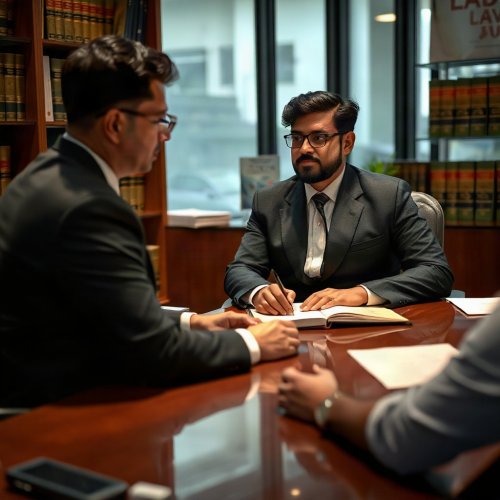
How to Recover Money Through Civil Court
Learn how to recover money through a civil court in India. Understand the legal process, documents required, the limitation period, and when to consult a civil lawyer in Delhi.


⚖️ HOW LONG WILL YOU STAY SILENT?
📞 Call Karke Advocate Ko Apni Legal Problem Batayein.
Poochhne Mein Koi Nuksan Nahi Hota.
Ek Baatcheet Aapko Sahi Kanooni Disha Dikha Sakti Hai.
Speak to a Supreme Court Advocate Today.
Talk or Message in Any Language.
⚖️ HOW LONG WILL YOU STAY SILENT?
📞 Call Karke Advocate Ko Apni Legal Problem Batayein.
Poochhne Mein Koi Nuksan Nahi Hota.
Any Language Supported
How to Recover Money Through Civil Court
Recovering money from an individual or business can become challenging when repeated requests, reminders, or negotiations fail. Whether the amount is related to a personal loan, unpaid invoices, business transactions, breach of contract, or services rendered, Indian law provides legal remedies through civil courts for recovering legitimate dues.
A money recovery suit allows an aggrieved party to seek recovery of outstanding amounts through the appropriate civil court. However, the process involves specific legal procedures, documentation, limitation periods, and court requirements. Filing a case without proper preparation may lead to delays or procedural issues.
At Law Firm in Delhi, we assist individuals, professionals, and businesses with money recovery matters by providing practical legal guidance, document review, legal notices, court representation, and strategic legal advice. This guide explains how money recovery through a civil court works, the legal process involved, and why obtaining professional legal advice at an early stage is beneficial.
Why Choose Law Firm in Delhi?
Recovering money through legal proceedings requires careful preparation and compliance with procedural law. Our legal team provides reliable assistance throughout every stage of the recovery process.
Experienced Civil Litigation Team
We advise clients in money recovery suits, contractual disputes, commercial claims, and civil litigation before courts in Delhi.
Case-Specific Legal Strategy
Every recovery matter involves different facts, agreements, and evidence. We prepare a legal strategy based on the merits of each case.
Transparent Legal Guidance
Clients receive clear explanations regarding documentation, court procedures, legal timelines, and available remedies.
Professional Representation
Our advocates represent clients before civil courts and other competent forums while ensuring procedural compliance.
Client-Focused Approach
We prioritise timely communication, confidentiality, and practical legal solutions tailored to each client's needs.
Civil Cases We Handle
Our legal team provides assistance in various civil matters, including:
- Money recovery suits
- Contract disputes
- Commercial disputes
- Recovery of unpaid invoices
- Loan recovery matters
- Partnership disputes
- Property disputes
- Consumer disputes
- Injunction suits
- Specific performance suits
- Recovery against businesses
- Recovery of security deposits
- Breach of agreement claims
- Civil appeals
Our Legal Services
We offer end-to-end legal assistance for money recovery matters.
Legal Consultation
Understanding the facts, reviewing agreements, invoices, and supporting documents.
Legal Notice Drafting
Preparing and sending professionally drafted legal notices demanding payment before initiating litigation.
Case Evaluation
Assessing the legal strength of the claim, limitation period, jurisdiction, and available evidence.
Drafting Recovery Suit
Preparing civil pleadings and filing the recovery suit before the competent court.
Court Representation
Representing clients during hearings, evidence, arguments, and execution proceedings.
Execution of Decree
Assisting clients in enforcing court orders to recover the awarded amount after a favourable judgment.
Legal Process for Recovering Money Through Civil Court
Step 1 – Review the Claim
The first step is to determine whether the claim is legally recoverable. Relevant documents may include agreements, invoices, receipts, bank records, emails, WhatsApp messages, or acknowledgements of debt.
Step 2 – Send a Legal Notice
In many cases, a legal notice is issued to the opposite party demanding payment within a specified time. A well-drafted notice may encourage settlement without court proceedings.
Step 3 – Identify the Appropriate Court
Jurisdiction depends on factors such as:
- Place where the transaction occurred
- Residence or business location of the defendant
- Value of the claim
- Nature of the dispute
Step 4 – File the Recovery Suit
If payment is not received, a civil suit may be filed before the competent court with all supporting documents.
Step 5 – Court Proceedings
The court generally follows these stages:
- Filing of plaint
- Issuance of summons
- Written statement by defendant
- Framing of issues
- Evidence by both parties
- Final arguments
- Judgment
Step 6 – Execution of Decree
If the court passes a decree in favour of the claimant and payment is still not made voluntarily, execution proceedings may be initiated as permitted by law.
Documents Commonly Required
Depending on the facts of the case, documents may include:
- Written agreement or contract
- Loan agreement
- Invoices
- Bills
- Bank statements
- Payment receipts
- Cheques
- Dishonoured cheque memo
- Emails
- WhatsApp conversations
- Account statements
- GST invoices
- Identity proof
- Business records
Why Early Legal Advice Matters
Delaying legal action can affect your rights due to limitation periods and loss of important evidence. Seeking legal advice at an early stage offers several benefits:
- Assessment of the legal strength of the claim
- Timely issuance of legal notices
- Preservation of documentary evidence
- Proper calculation of recoverable amounts
- Identification of the correct legal remedy
- Compliance with limitation requirements
- Better preparation for litigation
Professional legal advice also helps parties explore settlement opportunities where appropriate.
Courts Covered
Our advocates assist clients before:
- Civil Courts in Delhi
- District Courts
- Commercial Courts
- Appellate Courts
- Delhi High Court (where applicable)
Important Legal Provisions Related to Money Recovery
Money recovery claims are governed by various laws depending on the nature of the dispute. Some important legal provisions include:
- Code of Civil Procedure, 1908 (CPC) – Governs civil suits and court procedures.
- Order XXXVII CPC – Summary suits for recovery based on written contracts, bills of exchange, promissory notes, and negotiable instruments.
- Indian Contract Act, 1872 – Governs contractual obligations and breach of contract.
- Limitation Act, 1963 – Prescribes the time limits for filing recovery suits.
- Negotiable Instruments Act, 1881 – Relevant in cheque dishonour cases.
- Commercial Courts Act, 2015 – Applies to specified commercial disputes above prescribed values.
The applicable law depends on the facts and nature of the transaction.
Frequently Asked Questions
1. Can I recover money through a civil court?
Yes. Civil courts provide legal remedies for recovery of money arising from valid legal claims.
2. Is a legal notice mandatory?
While not mandatory in every case, issuing a legal notice is often advisable before filing a recovery suit.
3. How long does a money recovery case take?
The duration depends on the complexity of the dispute, evidence, and court workload.
4. What is the limitation period for filing a recovery suit?
The limitation period varies depending on the nature of the claim. Timely legal advice is important.
5. Can I recover money without a written agreement?
In some cases, recovery may still be possible based on other documentary or electronic evidence.
6. What documents should I preserve?
Keep agreements, invoices, bank records, emails, messages, receipts, and payment acknowledgements.
7. Can businesses file recovery suits?
Yes. Businesses can initiate recovery proceedings for unpaid invoices and contractual dues.
8. What if the defendant ignores court notices?
The court proceeds according to applicable legal procedures.
9. Can interest also be claimed?
Depending on the facts, contractual terms, and applicable law, interest may be claimed.
10. Can recovery be made after obtaining a decree?
Yes. Execution proceedings may be initiated if the judgment debtor does not comply voluntarily.
11. Is mediation possible?
Yes. Some disputes may be resolved through negotiation or mediation where appropriate.
12. Do I need a civil lawyer?
Professional legal assistance helps ensure compliance with procedural requirements and effective representation.
13. What is a summary suit?
A summary suit under Order XXXVII CPC provides a faster procedure for certain specified recovery claims.
14. Can I recover money from a company?
Yes, subject to the facts, contractual obligations, and applicable legal provisions.
15. When should I consult a lawyer?
It is advisable to seek legal advice as soon as payment becomes overdue or a dispute arises.
Need Help Recovering Your Money Through Civil Court?
If an individual or business has failed to repay money owed to you, obtaining timely legal advice can help you understand the available legal remedies and take appropriate action. Every recovery matter requires careful evaluation of documents, limitation periods, and applicable laws.
Law Firm in Delhi provides confidential consultations, legal notice drafting, money recovery suit filing, civil court representation, and legal guidance for individuals and businesses across Delhi.
Phone: 1169261749
Website: lawfirmsindelhi.in